
STM32L0538-DISCO
Support for the STM32L0538-DISCO board
Support for the STM32L0538-DISCO board
Introduction
The STM32L0538-DISCO discovery kit features an ultra low-power stm32l053c8t6 microcontroller with 64KB of FLASH and 8KB of RAM. The board also provides an on-board 2.04" E-paper display (not supported yet).

Pinout
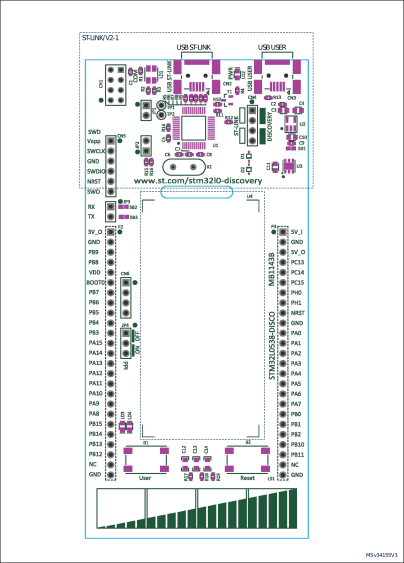
MCU
| MCU | STM32L053C8 |
|---|---|
| Family | ARM Cortex-M0+ |
| Vendor | ST Microelectronics |
| RAM | 8KiB |
| Flash | 64KiB |
| Frequency | up to 32 MHz |
| Timers | 9 (2x watchdog, 1 SysTick, 5x 16-bit, 1x RTC) |
| ADCs | 1x 12 bit (up to 16 channels) |
| UARTs | 3 (two USARTs and one Low-Power UART) |
| I2Cs | 2 |
| SPIs | 4 |
| RTC | 1 |
| Datasheet | Datasheet |
| Reference Manual | Reference Manual |
| Programming Manual | Programming Manual |
| Board Manual | Board Manual |
Supported features
| Peripheral | Configuration |
|---|---|
| TIMs | TIM2 |
| UARTs | USART1 on PA10 (RX), PA9 (TX) |
| SPIs | SPI1 on PB5 (MOSI), PB4 (MISO), PB3 (SCLK); SPI2 on PB15 (MOSI), PB14 (MISO), PB13 (SCLK) |
Flashing the device
Flashing the board using OpenOCD
The board can be flashed using OpenOCD via the on-board ST-Link adapter. Then use the following command:
make BOARD=stm32l0538-disco -C examples/basic/hello-world flashFlashing the Board
A detailed description about the flashing process can be found on the
guides page.
The board name for the STM32L0538-DISCO is stm32l0538-disco.
Can’t add a suggestion here.
STDIO
STDIO is connected to pins PA9 (TX) and PA10 (RX) so an USB to UART adapter is
required. Use the term target to open a terminal:
make BOARD=stm32l0538-disco -C examples/basic/hello-world termIf an external ST-Link adapter is used, RX and TX pins can be directly connected to it. In this case, STDIO is available on /dev/ttyACMx (Linux case).